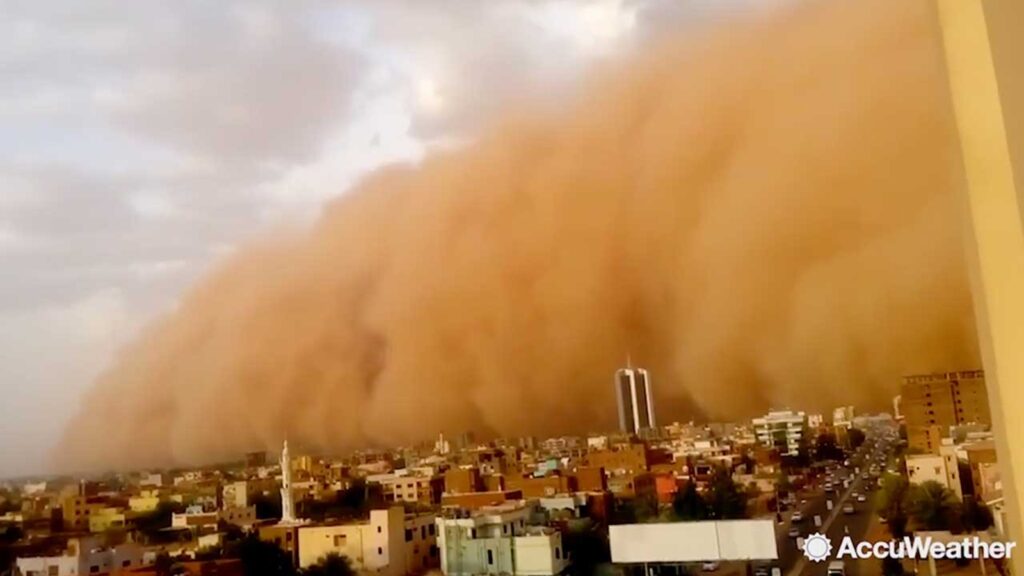
Imagine being in the middle of a hot, dry desert, surrounded by endless dunes of golden sand. The sun beats down on you, making every step feel like a chore. Suddenly, the sky darkens, and the air grows thick with an eerie, yellowish haze. Before you know it, a massive wall of dust and sand comes crashing down, reducing visibility to almost zero. Welcome to the world of haboobs!
So, what exactly is a haboob? Simply put, a haboob is a type of dust storm that forms when a strong wind blows over a dry, arid region, picking up massive amounts of sand and dust along the way. The term “haboob” comes from the Arabic word “habb,” which means “blasting” or “drifting,” and that’s precisely what happens when one of these storms hits.
How Do Haboobs Form?
Haboobs are usually triggered by strong thunderstorms or the collapse of a cold front. When this happens, a massive amount of air is displaced, causing a strong gust of wind to blow outward from the storm center. As the wind sweeps across the desert landscape, it picks up loose sand and dust, reducing visibility and creating a massive wall of airborne particles.
The sand and dust particles are usually very fine, which allows them to remain suspended in the air for a long time, making the storm last for several hours or even days. In extreme cases, haboobs can reduce visibility to just a few feet, making it extremely dangerous for anyone caught outside.
Types of Haboobs
There are several types of haboobs, including:
- Simple haboobs: These are the most common type and are usually triggered by thunderstorms or cold fronts.
- Complex haboobs: These are larger and more intense, often covering entire cities or regions.
- Supercell haboobs: These are extremely rare and form when a supercell thunderstorm develops over a dry, desert region.
Haboobs can also be classified based on their duration, with some lasting just a few hours and others persisting for several days.
The Impact of Haboobs
Haboobs have a significant impact on the environment and human activity. For one, they can reduce air quality, making it difficult for people with respiratory issues to breathe. They can also disrupt transportation, causing flight delays and road closures.
In addition, haboobs can damage crops, reducing agricultural productivity and affecting the local economy. In some cases, they can even lead to dust pneumonia, a serious health condition caused by inhaling large amounts of dust.
Despite the dangers, haboobs are also an important part of the ecosystem, helping to redistribute nutrients and sediment across the desert landscape.
So the next time you hear about a haboob storm, remember that it’s not just a simple dust storm, but a powerful force of nature that demands our respect and awe.